
A transition to plan for
GS1 describes an industry ambition for point-of-sale systems to support reading and processing 2D barcodes by 2027. Its guidance includes a transition alongside existing linear barcodes. This should not be read as a universal requirement to immediately remove current barcodes.
A marketing QR code is only part of the picture
A QR code linking to a website and a code meeting GS1 retail checkout requirements serve different needs. The guidance distinguishes data, code types and system capabilities. Before redesigning, clarify the requirements for your products and sales channels with trading partners and your GS1 organisation.
Our design perspective: reserve the space
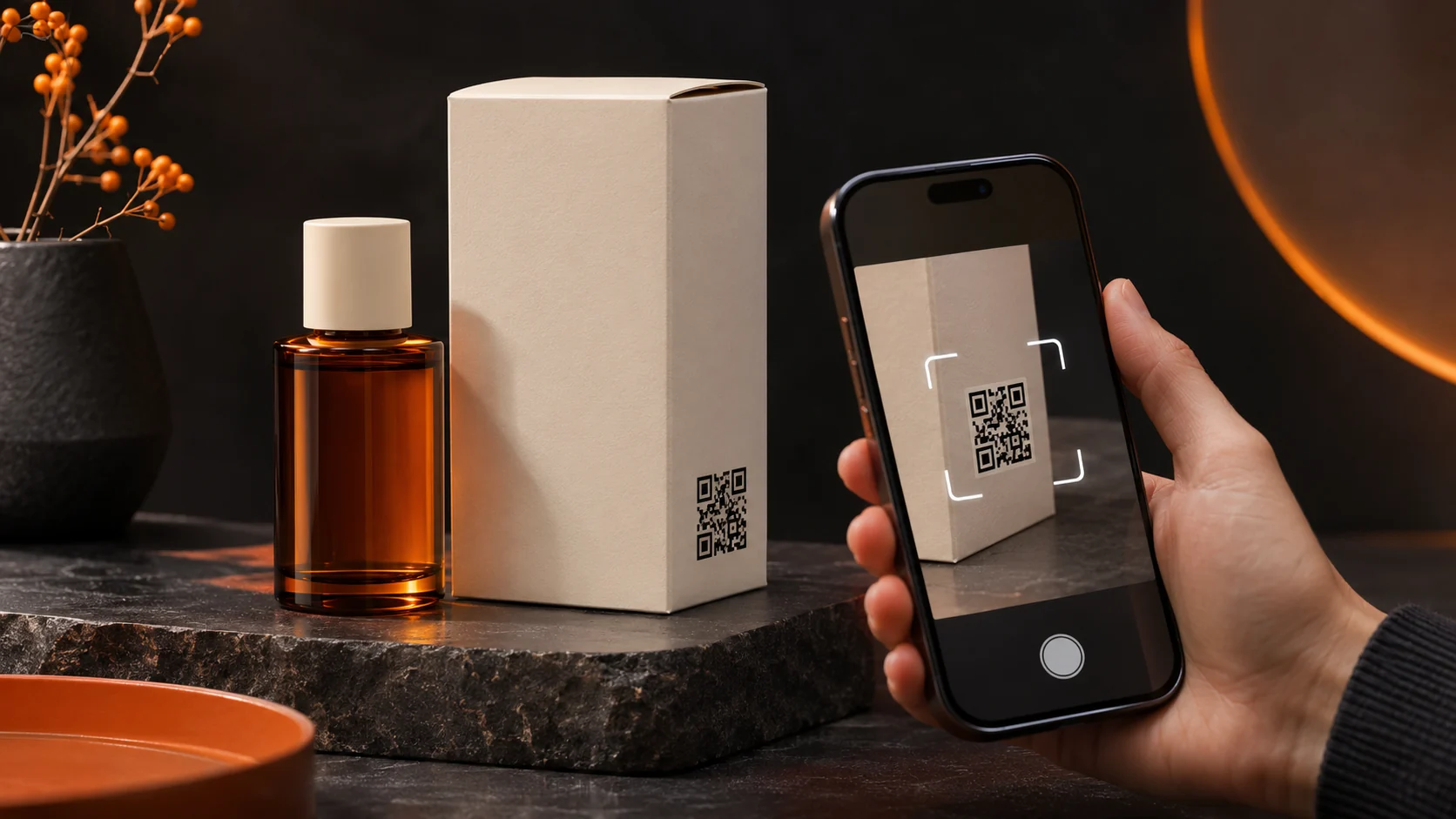
A strong label reserves room for a readable code while preserving the product hierarchy. Discuss the template, size, contrast, material and code placement early. A curved bottle or glossy finish can complicate reading: test the final substrate rather than relying on a screen preview.
Plan the scan destination too
For a customer-facing QR code, plan a useful mobile page with usage guidance, range information or product details. Choose a durable address and assign responsibility for maintaining it. Before printing, test across devices and have the relevant partners confirm technical compliance. Approve the artwork and destination content together.
Sources : https://ref.gs1.org/guidelines/2d-in-retail/1.1.0/
https://ref.gs1.org/docs/2025/Retailers-migrating-to-single-2D-for-private-label-and-in-store-labelled-goods_FINAL_v0.3