
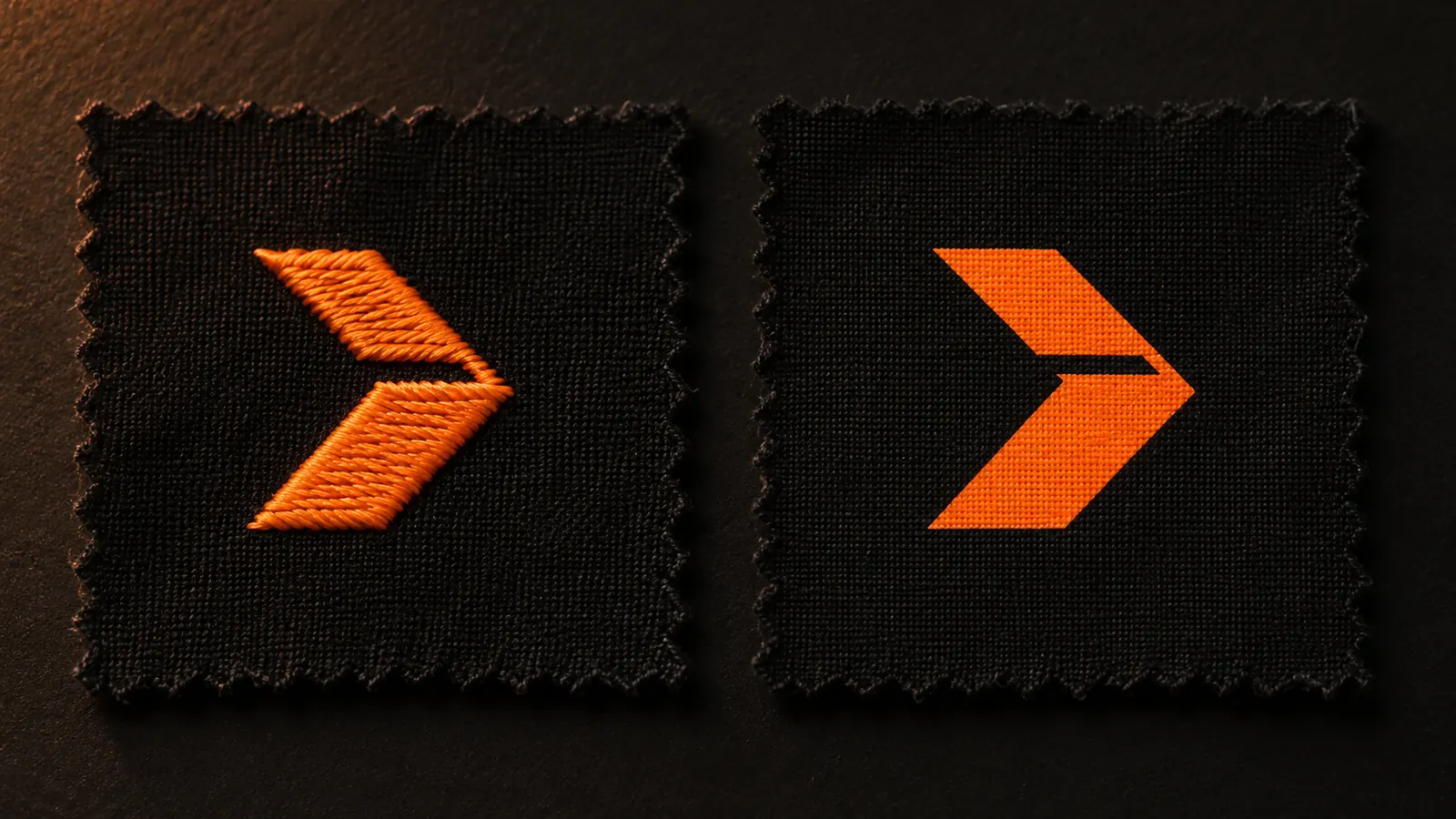
A design can look sharp on screen and lose its detail on a sweatshirt. The size, fabric and production method all affect what remains legible. To choose between embroidery and screen printing, start by defining how you want the design to look on the actual garment.
Design at the final size
Tell the supplier the width in centimetres, the placement and the garment reference. On a fictional sweatshirt, a small chest emblem can lose its internal gaps when you shrink artwork designed for the back. Prepare a version with more open shapes and compare both at actual size.
Prepare an embroidery variant
Digitising translates the artwork into stitch instructions for the machine. Ask the supplier which line widths and letter heights work with the chosen fabric and stitch type. If letters touch in the sample, increase spacing or simplify the design. A supplier’s published dimensions apply to its own process and products.
Specify the inks for screen printing
For a spot-colour print, specify the intended colours and ask how the printer wants to receive separations. An orange motif on black fabric may need a light underbase, depending on the ink and desired finish. Confirm this with the printer and check the edges of solid areas and any fine details on a proof.
WOLARIX analysis · approve a sample on the right fabric
Request a sample on the selected fabric and colour. Check whether the artwork reads at viewing distance, how it sits against the seams and how it feels. If the garment will be washed often, compare the sample before and after washing it according to the care instructions. Record the approved artwork version and dimensions before the production run.